
Gout: Symptoms, Causes, Diagnosis, and Treatment Explained
Medically reviewed by Dr. Abhijeet Danve, MD, MHS, FACR, board-certified rheumatologist
Gout is often described as one of the most painful forms of arthritis — and for good reason. It typically strikes without warning, frequently overnight, and can turn something as simple as a bedsheet brushing against your foot into unbearable pain. Gout affects approximately 3.9% to 5.1% of US adults, making it the most common form of inflammatory arthritis in the country, and its prevalence has been climbing for decades alongside rising rates of obesity, diabetes, and metabolic syndrome.
Understanding what’s actually happening in the body during a gout attack makes the condition far less mysterious, and far more manageable.
What Is Gout?
Gout develops when uric acid builds up in the bloodstream and forms crystals that deposit in and around the joints — most commonly the big toe, though knees, ankles, wrists, hands, and elbows are all fair game. The body produces uric acid naturally as it breaks down purines, compounds found in certain foods and drinks. Normally, the kidneys filter this out. Uric acid clearance from the body is determined by our genes. The majority of patients with gout are not able to clear it from the kidneys efficiently, leading to accumulation first in the bloodstream and then in the joints, eventually triggering a gout flare.
Not everyone with elevated uric acid develops gout — plenty of people carry high levels without ever having an attack. But the longer uric acid stays elevated, the greater the odds that a flare eventually happens. About 20% of people with high uric acid levels develop gout in a 5-year time frame.
The Mechanism of Gout Flare
Gout is, at its core, a crystal deposition disease. When uric acid concentration exceeds what the body can keep dissolved, it forms needle-like monosodium urate crystals that settle into joint spaces and surrounding tissue. The immune system treats these crystals as foreign invaders, triggering an intense inflammatory response — which is what actually produces the sudden pain, swelling, and heat of a flare. It’s this immune reaction, more than the crystals themselves, that drives the severity of an attack.
Hyperuricemia: The Root Condition
Hyperuricemia — elevated uric acid in the blood — is the underlying state that makes gout possible. It’s worth noting hyperuricemia and gout aren’t the same thing: many people with elevated uric acid levels never develop symptoms at all, a state sometimes called asymptomatic hyperuricemia. Whether crystals form and trigger a flare depends on how high uric acid climbs, how long it stays elevated, and individual factors researchers don’t fully understand yet. Still, persistent hyperuricemia is the strongest predictor of future attacks, which is why long-term treatment targets uric acid levels directly rather than only managing flares as they happen.
Recognizing a Gout Attack
Gout attacks tend to escalate fast, going from nothing to severe within hours. During a flare, expect:
- Intense pain and tenderness — sometimes severe enough that even light touch is unbearable
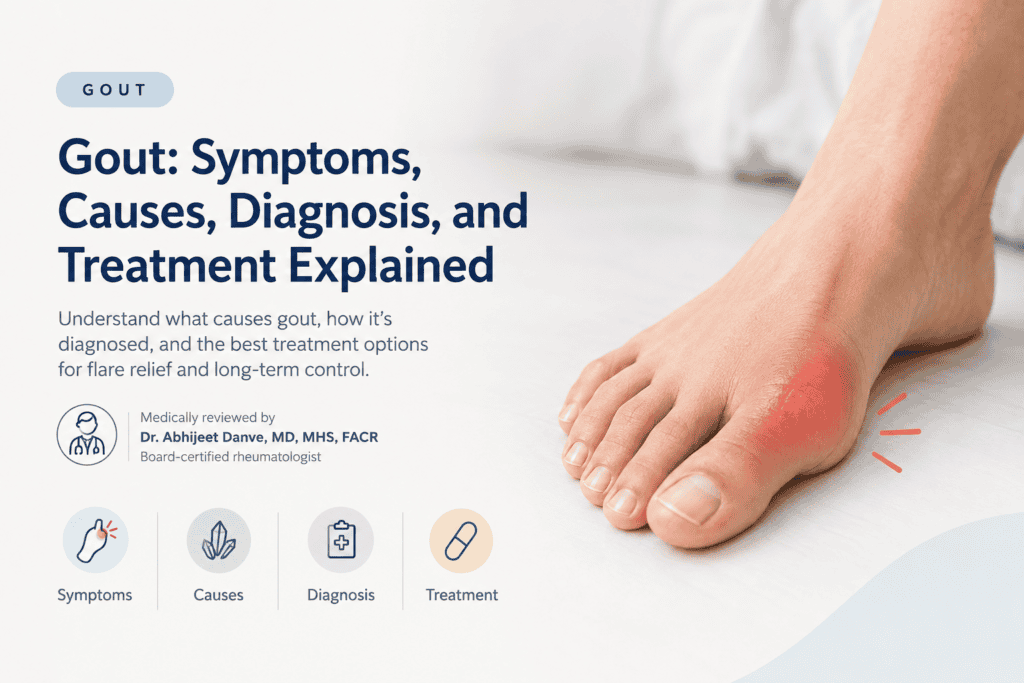
- Swelling and warmth in the joint, often described as feeling “on fire”
- Skin discoloration around the affected area
- Stiffness and pain that limits movement
A typical flare lasts one to two weeks, though severity and duration vary. Between attacks, many people are symptom-free entirely — part of why gout can go untreated for years, cycling through flares without a clear diagnosis.
Common Triggers
While hyperuricemia sets the stage, specific triggers often precede an actual flare:
- Alcohol, especially beer and spirits
- Red meat, organ meat, and certain high-purine seafood
- Sugary drinks and foods high in fructose
- Dehydration
- Rapid weight loss or fasting
- Physical stress, illness, or surgery
- Starting or adjusting uric-acid-lowering medication (which can paradoxically trigger a short-term flare before levels stabilize)
Tracking flares over time can help identify personal triggers and, in some cases, avoid future attacks.
Population Impact and Demographics
Gout disproportionately affects certain groups. Men are affected roughly three to four times more often than women, largely because estrogen has a uric-acid-lowering effect that offers some protection before menopause — after which gout risk in women rises and gradually approaches that of men. Prevalence also increases with age, and rates run notably higher among people with obesity, chronic kidney disease, hypertension, and metabolic syndrome. Genetics matter too: a family history of gout meaningfully raises individual risk, independent of diet or lifestyle.
How Gout Is Diagnosed
Diagnosis usually starts with a physical exam and detailed symptom history — when the pain started, which joints are involved, and whether flares come and go. From there, a provider may use:
- Imaging (X-ray, ultrasound, or dual-energy CT scan) to check for joint changes
- Blood tests to measure uric acid levels
- Joint fluid aspiration — removing a small fluid sample from the joint to check directly for uric acid crystals
This last step is often the most definitive, since it confirms the crystals rather than just inferring their presence from symptoms alone.
Flare Relief: What Helps Right Now
When a flare hits, the goal is fast inflammation control:
- NSAIDs (ibuprofen, naproxen) for pain and swelling, when appropriate for the individual’s health profile
- Colchicine, most effective when started within the first 12–24 hours of a flare
- Corticosteroids (oral or injected), for flares that don’t respond well to the above or when NSAIDs/colchicine aren’t suitable
- Rest, elevation, and avoiding pressure or tight footwear on the affected joint
- Ice application
Long-Term Control: Preventing the Next Flare
Beyond managing individual attacks, long-term gout management focuses on keeping uric acid consistently below the threshold where crystals form:
- Uric-acid-lowering medications (allopurinol, febuxostat, probenecid, pegloticase) taken continuously, not just during flares
- Regular monitoring of uric acid levels to confirm the target range is being maintained
- Consistent medication adherence — stopping and restarting treatment can itself provoke flares
Lifestyle Changes That Support Long-Term Management
Medication does the heavy lifting for most patients, but lifestyle adjustments meaningfully reduce flare frequency alongside it:
- Limiting high-purine foods — red meat, organ meats, certain shellfish
- Reducing alcohol intake, particularly beer
- Cutting back on sugary beverages and high-fructose foods
- Maintaining a healthy weight, ideally through gradual rather than rapid weight loss
- Staying well-hydrated
- Managing related conditions like high blood pressure, diabetes, and kidney function, since these interact directly with uric acid levels
Why It’s Worth Seeing a Specialist
Left untreated, gout can cause lasting joint damage, tophi (uric acid deposits under the skin), and is linked to increased risk of kidney stones and heart disease. If attacks are becoming more frequent or severe, or you’re dealing with sudden, intense joint pain for the first time, it’s worth getting evaluated rather than waiting it out — especially since gout symptoms can sometimes resemble joint infections that need urgent care. Gout is associated with high risk of heart disease such as heart attack or heart failure.
A rheumatologist can help pin down the right combination of medication and dietary adjustments to reduce flare frequency over time, rather than just treating each attack as it comes. Axis Rheum offers virtual consultations for gout and other inflammatory joint conditions, which can be a practical option for getting a treatment plan started without a long wait for an in-person specialist.
This content is for educational purposes only and isn’t medical advice. Talk to by Dr. Abhijeet Danve, MD, MHS, FACR, board-certified rheumatologist, about your specific symptoms.
Ready to get your gout under control? Book an online consultation with Axis Rheum and see a rheumatologist from the comfort of your home.
Frequently Asked Questions
Most flares last one to two weeks, though this varies. Pain and swelling are typically worst in the first 24–48 hours and gradually ease from there.
Hyperuricemia means uric acid levels in the blood are higher than normal. Not everyone with hyperuricemia develops gout — many people carry elevated levels without ever having symptoms. But the risk of a flare increases the longer uric acid stays elevated.
Red meat, organ meats, certain seafood (like shellfish and sardines), alcohol (especially beer), and sugary or high-fructose foods and drinks are among the most common dietary triggers.
Gout can't be cured, but it can be very effectively controlled. With consistent uric-acid-lowering medication and lifestyle adjustments, many patients see a significant drop in flare frequency — some go years without another attack.
No. Gout is caused specifically by uric acid crystal buildup, distinguishing it from osteoarthritis (wear-and-tear) and autoimmune types like rheumatoid or psoriatic arthritis, though symptoms can sometimes overlap and require a specialist to distinguish clearly.
If you're experiencing sudden, intense joint pain and swelling for the first time, or if attacks are becoming more frequent or severe, it's worth getting evaluated. Gout symptoms can also resemble joint infections, which need urgent care to rule out.
Yes, especially in the first few months after starting uric-acid-lowering medication — flares can temporarily increase as levels adjust. This is expected and typically managed with colchicine or NSAIDs during the transition period, and settles once uric acid stabilizes at target levels.